If you walked onto a construction site today and then stepped onto one in 2030, you'd notice the difference right away. Not because people have disappeared. They haven't. But becuase everything around them is smarter. Machines are connected. Decisions are backed by data. Problems are picked up before they slow things down. And the whole site just runs... better. The "smart site" is already starting to take shape.
So, What Actually Is a Smart Site?
In simple terms, it's a site where technology does more of the heavy lifting behind the scenes. We're talking about things like:
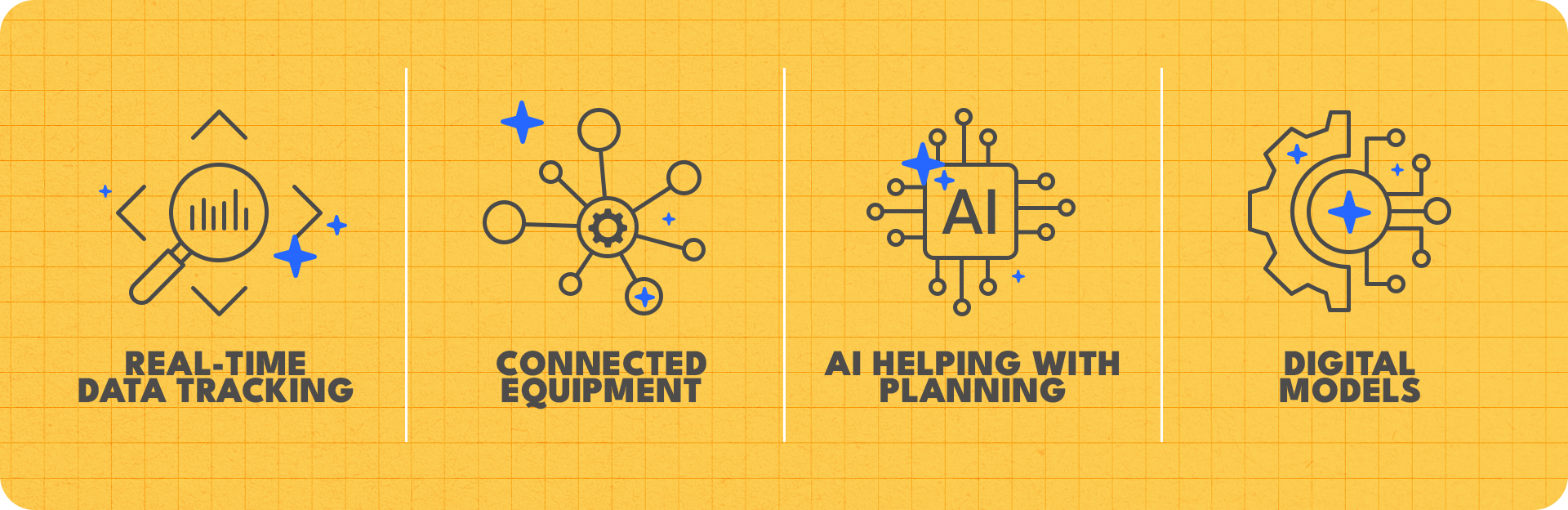
It's not about replacing people. It's about giving them better tools to do the job properly. And there's a reason this is happening now. The construction industry has struggled with productivity for years. While other industries have moved forward quickly, construction hasn't kept up at the same pace.
That's starting to change. Investment in construction technology is growing fast, with the global market expected to more than double by 2030. That tells you everything you need to know about the direction things are heading.
Data Will Be at the Centre of Everything.
One of the biggest shifts is how much construction will rely on data. Right now, a lot of decisions are still based on experience and instict. That won't disappear, but it will be backed up by real-time information. On a smart sitem you'll have:
- Sensors tracking progress and conditions.
- Equipment reporting how it's being used.
- Systems flagging potential delays before they happen.
Instead of reacting to issues, teams can get ahead of them. And of course, Ai is playing a big part in this too. It's already being used to help with planning, scheduling and cost forecasting, and that's only going to increase over the next few years.
You'll Build It Digitally Before You Build It for Real.
By 2030, most projects won't start on site. They'll start on screen. BIM has already changed how projects are designed and coordinated, but it's evolving into something more advanced. Digital twins will allow teams to track a live version of the project as it's being built. That means:
- Fewer surprises on site.
- Better coordination between teams.
- Less rework and wasted time.
It's a simple idea really. Fix problems before they become expensive.
But What About Jobs?
This is usually the big question. And the answer is pretty straightforward. Construction will always need people. But the types of roles, and the skills needed, may change a little. We're already seeing more demand for: BIM and digital engineers, planners who can work with data-driven tools, technically skilled site staff and people who are comfortable using new systems and technology. Traditional roles aren't disappearing any time soon, but they are evolving.
2030 isn't that far away. The companies that are already investing in technology, processes and people are the ones that will be ahead of the curve. The ones that wait will find themselves playing catch-up. Becuase this shift is happening.
Need People Who Can Work on Modern Construction Projects?
As construction changes, so does the type of talent needed to deliver it. Speak to our team today to find professionals who can operate in today's sites and tomorrow's. From experienced site teams to digital and technical specialists, we'll help you build a workforce that's ready for what's next.